ODIN and THOR: How innovative people and technology helped BNSF achieve its safest year ever
By STEPHEN MANNING
Staff Writer
Safety is embedded in every aspect of BNSF operations, from the largest infrastructure projects to the technology quietly working behind the scenes. Our employees’ consistent focus on safety got us to our safest year ever in 2025.
Maintaining our track is a critical element of our safety program. That’s why we spent $2.84 billion in 2025 to replace and upgrade rail and track infrastructure. Among our safety achievements for the year was our record-low rate of track-caused rail equipment incidents (REIs), a 33 percent reduction from the previous year.
Two cutting-edge systems, ODIN and THOR, helped our employees by transforming how we inspect and maintain the track on our 32,500-mile rail network.
Together, these systems are a leap forward in monitoring and detecting track conditions, enabling BNSF to enhance safety, improve efficiency, and embrace predictive maintenance like never before.
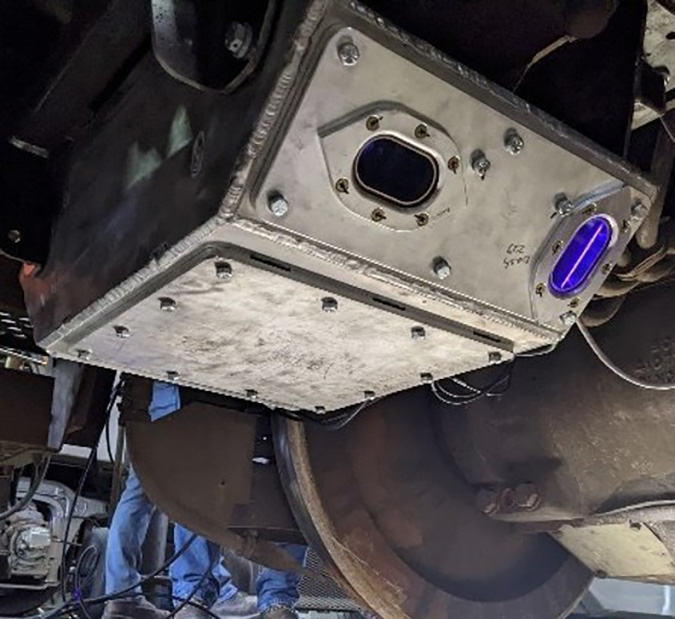
THOR and ODIN take continuous observations of the track components and roadbed to evaluate the overall condition of track and inform maintenance planning. In addition to identifying present defects that may require repair or a speed reduction to preserve safety, these systems identify conditions that suggest future defects may develop. In fact, the majority of track conditions identified by THOR and ODIN are not defects and are used to plan preventative maintenance, which prevents future defects.
The THOR and ODIN systems complement each other, using different technologies to monitor different aspects of track health, and we’re pushing forward on deployment of both to supplement visual track inspections performed by BNSF field personnel.
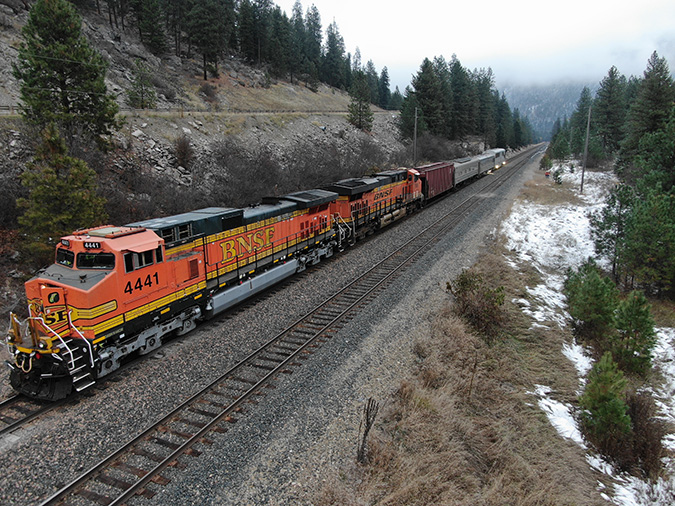
ODIN measures track geometry with precision
ODIN, short for Onboard Defect Identification & Notification, is a track geometry measurement system installed on the underside of locomotives. Housed in an aluminum box about the size of a large microwave oven, ODIN uses an array of sensors, including angled lasers, to measure critical aspects of the track’s geometry. These include track gauge (the distance between rails), cross-level (the difference in height between the tops of the rails), alignment, and the track surface profile.
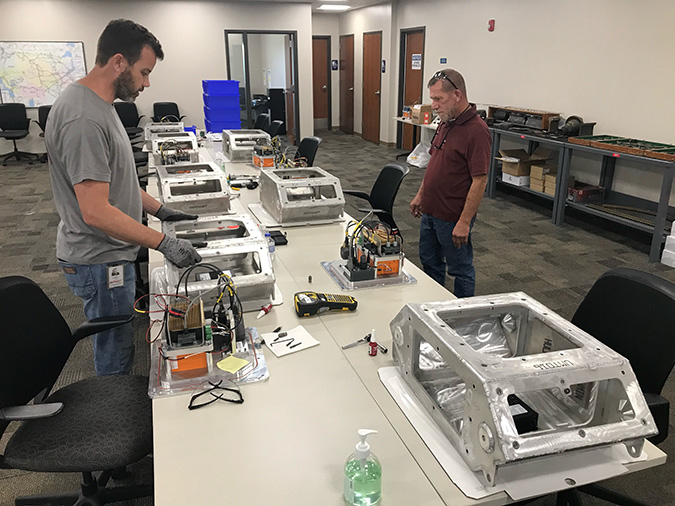
The system captures measurements every foot as the locomotive moves, providing continuous, real-time data on the condition of the track beneath. BNSF has performed this type of track geometry testing for many years using specialized geometry cars. ODIN enhances and consolidates this technology underneath a locomotive, enabling this testing to be performed during normal operation of revenue-service trains instead of operating separate inspection trains.
Introduced in 2025 after two years of rigorous pilot testing, ODIN delivers higher precision compared to traditional track geometry cars. In 2025, ODIN measured more than 150,000 miles of track.
We have more than 30 ODIN units monitoring most of our network, and we’ll expand to over 60 locomotives by 2027. Starting in 2026, ODIN will inspect more than 1 million miles of track each year, up from 500,000 miles previously covered annually with geometry cars.
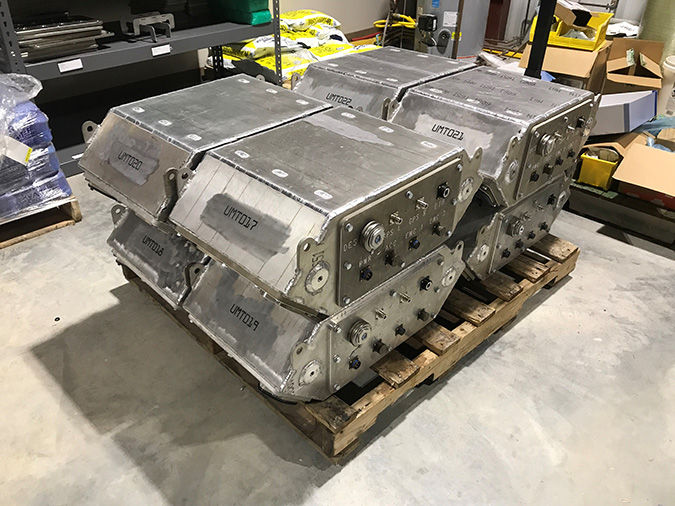
ODIN’s real-time data processing means that when a serious defect is detected, immediate action is taken to protect the track and prevent derailments. The goal is to reduce derailments caused by track geometry defects through more frequent and accurate inspections, while also providing valuable insights for long-term maintenance planning.
THOR captures images of rail from multiple angles
THOR, or Track Health Optical Recognition, which focuses on visual track conditions, complements ODIN’s track geometry measurements.
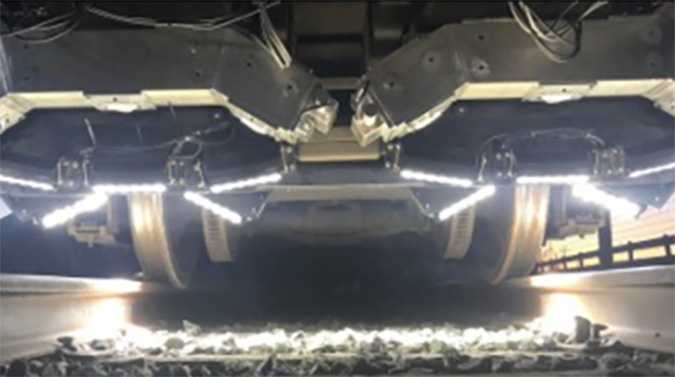
Mounted under BNSF’s track geometry cars, THOR uses high-speed optical cameras to capture thousands of detailed images of the rails at various angles. This enables detection of conditions not related to track geometry, at speeds up to 70 mph.
In 2025 alone, our three THOR units imaged 165,000 miles of track and found 1,900 defects, all of which were addressed before developing into serious problems. A notable success involved detecting a broken rail near the Bonneville hydroelectric dam, a critical safety finding due to the rail’s proximity to a major highway and sensitive infrastructure.
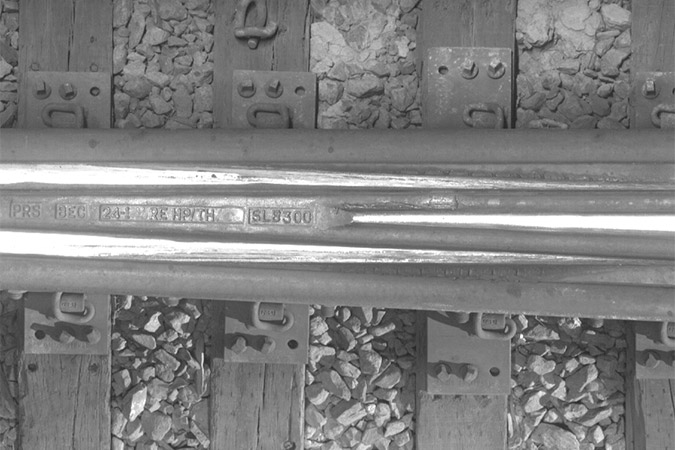
The THOR system analyzes images onboard using advanced graphics processing and machine vision algorithms, then transmits data within minutes to BNSF’s Track Geometry desk in Fort Worth. In addition to identifying defects, THOR generates a vast amount of imagery data used to monitor track conditions, which is a challenge to process and transfer across our 32,500-mile network. THOR is still relatively new, and continued advancement in both technology and data-transfer will further enhance THOR’s capabilities in years to come.
We plan to add two new THOR units in 2026. We’re also adding AI analysis to further boost our detection capabilities.
Together, these systems provide a comprehensive picture of track health.
How we approach track conditions, defects, and predictive maintenance
Monitoring track conditions and identifying defects are only half the battle. We have a robust process to act on the data these systems generate. When ODIN or THOR flag a possible issue, the information is immediately reviewed by expert teams who validate and prioritize the issue. If the observation is a defect, field crews are then dispatched to assess and repair the defect before it can affect safety or service reliability.
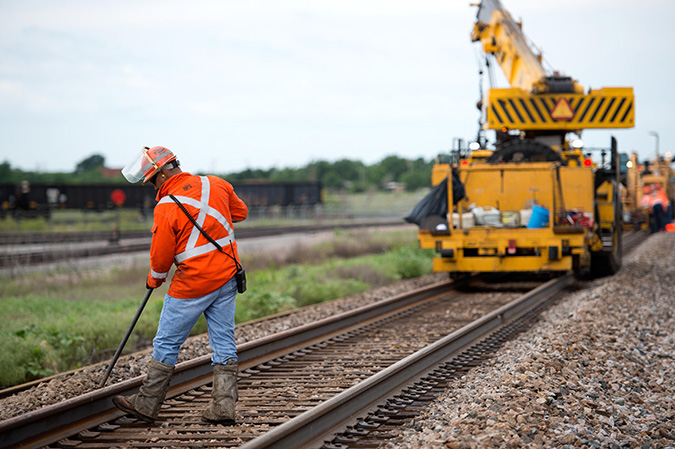
Monitoring and identifying track conditions, beyond simply defects, is a proactive approach and part of BNSF’s broader commitment to predictive maintenance, using data and analytics to identify potential failures before they occur. Predictive maintenance enables us to schedule repairs during planned maintenance windows, reducing unscheduled service interruptions and improving our network’s reliability.
We apply predictive maintenance across a broad front, and the increase in data from ODIN and THOR helps drive opportunities for improved materials or processes that either reduce or extend maintenance cycles. One example of this is our ongoing initiative to upgrade turnouts with movable point frogs, which reduce wear and tear on the track and require less maintenance than standard frogs. We’re even using AI to optimize when and where we send crews to trim vegetation along our track before it hinders visibility.
Looking Ahead
BNSF is proud to be an industry leader in track inspection innovation. The integration of ODIN and THOR exemplifies our culture of continuous improvement—using technology and data to enhance safety, reduce risk, and streamline maintenance. As we expand these systems and incorporate AI-driven analytics, we’ll further enhance our ability to predict and prevent defects, delivering safer, more reliable service.